Sugar free jam is one of those pantry swaps that sounds like a compromise but doesn't have to be. Whether you're cutting back on added sugar, following a keto or low-carb lifestyle, or just trying to make smarter everyday choices, the right jar of sugar free jam tastes genuinely good — not like a consolation prize. Here's everything you need to know before you buy.
What Does 'Sugar Free Jam' Actually Mean?
The term 'sugar free' on a jam label has a specific regulatory meaning: the product contains less than 0.5 grams of sugar per serving. But here's where it gets interesting — 'sugar free' doesn't always mean 'sweetener free.' Most sugar free jams replace cane sugar with an alternative sweetener that provides sweetness without the same glycemic impact. The fruit itself may still contribute natural sugars, which is why labels can look different from brand to brand. Reading the full nutrition panel — not just the front of the jar — tells you far more than the marketing claim alone.
Sugar Free vs. No Added Sugar: What's the Difference?
These two phrases are often used interchangeably but they mean different things. 'No added sugar' means no sugar was added during processing — but the product can still contain natural sugars from fruit. 'Sugar free' means the total sugar content (including naturally occurring sugars) is under 0.5g per serving. For most people eating jam on toast or stirring it into yogurt, both categories are meaningful steps away from traditional jam, which can contain 10–13 grams of added sugar per tablespoon. The better question to ask: what is it sweetened with instead?
How Is Sugar Free Jam Sweetened?
Common sweeteners used in sugar free jams include erythritol, xylitol, stevia, monk fruit, and maltitol. Each one behaves differently in terms of taste, texture, and how the body processes it. Erythritol and monk fruit are popular because they have little to no aftertaste and minimal effect on blood sugar levels for most people. Stevia works well in small amounts but can taste bitter at higher concentrations. Maltitol, a sugar alcohol sometimes used in 'diabetic' products, still has a meaningful caloric load and glycemic impact — something worth knowing if you're watching carbs closely. GOOD GOOD jams use erythritol, which keeps the texture close to traditional jam and the taste clean.
What to Look for When Buying Sugar Free Jam
The sugar free jam aisle has grown considerably, which is a good thing — but it also means not every jar is created equal. A few simple checks make it easy to find one that actually delivers on taste and quality.
1. Check the Ingredient List, Not Just the Front Label
The shorter and more recognizable the ingredient list, the better. A quality sugar free jam should lead with real fruit — strawberries, blueberries, raspberries — and follow with a sweetener, a gelling agent (usually pectin), and not much else. If the list includes multiple syrups, artificial flavors, or fillers, the jam is likely compensating for lower fruit content.
2. Look at the Total Carb Count, Not Just 'Sugar'
If you're following a keto or low-carb approach, total net carbs matter more than the sugar line alone. Some sugar alcohols subtract from total carbs (erythritol has zero net carbs), while others don't. A product can say 'sugar free' and still carry 10+ grams of net carbs per serving depending on what's in it. Aim for jams with 2–5 grams of net carbs per serving if you're watching carb intake closely.
3. Consider the Fruit Percentage
Fruit content varies widely across sugar free jams. Higher fruit percentage means more natural flavor and less reliance on added flavoring to make up the difference. This shows up in taste — a jam with 50%+ fruit content has a brightness and texture that lower-fruit versions simply can't replicate. It also means more naturally occurring vitamins and fiber, even in small serving sizes.
4. Think About What You'll Use It For
Not all jams perform the same way across different uses. A looser, more spreadable jam works well on toast or in yogurt. A jam with good body — one that holds its shape — is better for baking, glazing, or swirling into oatmeal. If you're planning to use jam as a glaze for chicken or pork (yes, that works beautifully), look for a slightly thicker consistency that will caramelize well under heat.
Sugar Free Jam and the Keto Question
Traditional jam is essentially off the table on a ketogenic diet — a single tablespoon of regular strawberry jam can use up a meaningful chunk of your daily carb budget. Sugar free jam changes that equation significantly. A well-formulated sugar free jam made with erythritol or monk fruit can bring net carbs down to 1–3 grams per serving, making it genuinely compatible with keto eating. This is why you'll find sugar free jam showing up in keto recipes more and more — from fat bombs to keto cheesecakes to stuffed pancakes made with almond flour.
Is Sugar Free Jam Keto Friendly?
It depends on the sweetener. Jams made with erythritol or pure monk fruit extract are generally considered keto friendly because these sweeteners have negligible impact on blood glucose and insulin response for most people, and erythritol's carbs don't count toward net carbs. Jams sweetened with maltitol or sorbitol are trickier — those sugar alcohols do have a partial glycemic effect and should be counted (at least partially) toward net carbs. If keto is your goal, check the sweetener before you assume any sugar free product fits your plan.
The Best Ways to Use Sugar Free Jam
One of the best things about sugar free jam is that it's a direct, one-to-one swap for traditional jam in almost every situation. You don't need to change your recipes or relearn how to use it. Here are the everyday uses that are easy to overlook beyond the obvious toast application.
Breakfast and Snacking
The classic applications still hold: spread on whole grain or sourdough toast, swirled into Greek yogurt, or layered into overnight oats. But sugar free jam also works wonderfully as a topping for cottage cheese (an underrated combination), stirred into plain kefir, or dolloped onto rice cakes when you want something sweet without committing to a full dessert.
Cooking and Glazing
Jam as a cooking ingredient is genuinely underused. A spoonful of raspberry or peach jam stirred into a pan sauce for chicken or pork adds sweetness and acidity that balances rich proteins beautifully. Brush it onto salmon before roasting. Stir it into a vinaigrette for a fruity salad dressing that doesn't need added sugar. The versatility extends well past breakfast.
Baking
Sugar free jam holds up well in most baking applications: thumbprint cookies, linzer tarts, jam-filled muffins, swirl loaves. The texture may be slightly looser than traditional jam after heating, but the flavor is fully there. If you're baking with almond or oat flour, fruit jam adds moisture and natural sweetness that helps compensate for the different behavior of alternative flours.
Cheese Boards and Entertaining
A well-chosen sugar free jam absolutely belongs on a cheese board. The contrast of a tart raspberry or a savory-sweet chili fig jam against aged cheddar, brie, or goat cheese is exactly what a good charcuterie spread needs. Guests don't need to know it's sugar free — they'll just think it's delicious.
Why GOOD GOOD Makes Sugar Free Jam the Way It Does
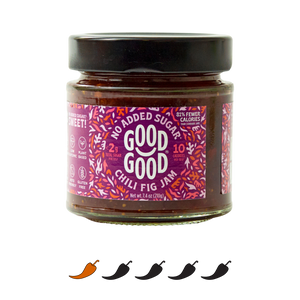
GOOD GOOD was founded in Iceland, where clean, honest ingredients have always been part of the culture. The brand was built on a straightforward premise: food that's better for you shouldn't taste worse. GOOD GOOD jams use real fruit, erythritol as the primary sweetener, and no artificial flavors or colors. The result is a jam that tastes like jam — not like a health product pretending to be jam. The lineup covers the classics (Strawberry, Blueberry, Raspberry, Grape Jelly) and a few unexpected options like Chili Fig Jam and Lemon Curd, so there's a flavor for almost every use case. It's the kind of pantry staple where you switch once and don't look back.
Frequently Asked Questions
What is sugar free jam made with instead of sugar?
Most sugar free jams use alternative sweeteners like erythritol, monk fruit, stevia, or xylitol in place of cane sugar. The best options use sweeteners with little to no aftertaste and minimal impact on blood sugar. GOOD GOOD uses erythritol, which has a clean taste and zero net carbs.
Is sugar free jam actually good for you?
Sugar free jam can be a meaningful upgrade from traditional jam, especially if you're reducing added sugar intake. It typically has significantly fewer calories and carbs per serving. That said, it's still a condiment — the biggest benefit is that it lets you enjoy the flavor of jam without the added sugar load of conventional spreads.
Can you use sugar free jam the same way as regular jam?
Yes, in almost all cases. Sugar free jam works as a direct substitute on toast, in yogurt, in baking, and as a cooking glaze. The texture may vary slightly by brand, but a good quality sugar free jam performs nearly identically to traditional jam in everyday use.
Is sugar free jam keto friendly?
It depends on the sweetener. Sugar free jams made with erythritol or monk fruit are generally keto friendly, as these sweeteners don't contribute net carbs. Jams using maltitol or sorbitol have a partial glycemic effect and should be counted carefully toward your daily carb limit.
What's the difference between sugar free jam and no added sugar jam?
'Sugar free' means less than 0.5g of total sugar per serving. 'No added sugar' means no sugar was added during processing, but natural fruit sugars may still be present. Both are better choices than conventional jam, but they're not the same thing — no added sugar jam can still have several grams of naturally occurring sugar per serving.
Ready to make the swap? Browse GOOD GOOD's full lineup of sugar free jams and find your new pantry staple at goodgoodbrand.com.
Shop this recipe: GOOD GOOD Jams, Jellies & Spreads Bundle